Because truly understanding IBS requires looking past a simple label, we are taking a deeper dive today into the extensive clinical evidence connecting a stressed nervous system to an irritable bowel. In invite you to grab a cup of tea and settle in for this six-minute read. It is a more comprehensive look at how the latest science can help you finally break the loop of chronic digestive distress.
In my experience as a colon hydrotherapist, I have heard from countless clients who felt a brief sense of relief when they were finally diagnosed with IBS, only for that relief to turn into deep frustration. The truth is, “IBS” (Irritable Bowel Syndrome) is not a definitive condition that shows up on a blood test, a scan, or standard lab work. It is simply a medical label, an umbrella term for a collection of chronic symptoms that the conventional system struggles to explain. When you treat a label rather than looking for the root cause, you find yourself stuck in a loop of endless symptom management, missing the deeper picture of what your body is actually trying to communicate.
If you have been diagnosed with IBS, you have probably been handed a generic list of foods to avoid and told to come back if things get worse. But if you have strictly cut out gluten, dairy, and high-FODMAP foods and still find yourself dealing with unpredictable bloating and pain, you aren’t doing anything wrong. There is simply more to understand about the path that led to your symptoms.
The medical community has officially reclassified IBS. It is no longer viewed as a simple structural problem with your stomach; it is now classified as a disorder of gut-brain interaction (DGBI) according to the National Library of Medicine.
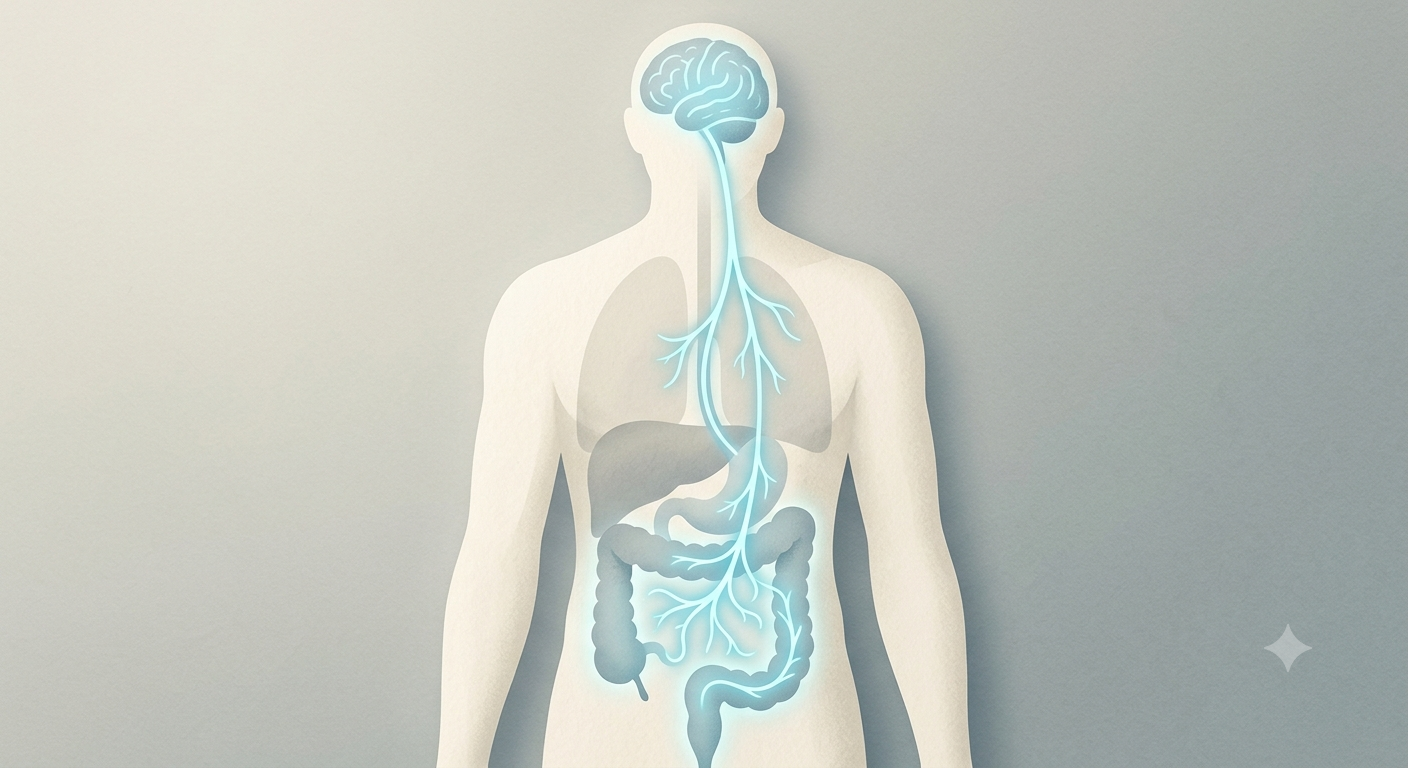
Your brain and your gut are constantly talking to each other via a massive highway called the vagus nerve. When your brain is experiencing emotional or nervous system distress, it sends emergency signals directly into your digestive tract.
What the Clinical Evidence Tells Us
The link between a stressed nervous system and an irritable bowel isn’t a theory, it is a deeply studied medical fact. Here is what the latest peer-reviewed clinical research shows:
- The Anxiety Connection: Up to 60% of people struggling with IBS also meet the clinical criteria for anxiety or depression. A massive clinical review published in the journal CNS Neuroscience & Therapeutics highlights that chronic psychological stress actually modifies our central pain circuitry. It turns up the volume on the nerves in your digestive tract, leaving your bowel hyper-sensitive to ordinary digestive movements, a concept researchers frequently refer to as the “irritable bowel and irritable brain” connection.
- The Impact of Early Childhood Stress: Our nervous systems are wired in our youth. A landmark study published in Clinical Gastroenterology and Hepatology evaluating early adverse life events found that individuals with a history of emotional trauma or adverse childhood experiences are significantly more likely to develop functional gut issues as adults. The data explicitly shows that anxiety acts as a direct bridge, explaining over half of that physical impact on adult gut health.
- The Trauma & PTSD Link: Trauma physically registers in the body. A comprehensive meta-analysis published in the Journal of Gastroenterology and Hepatology revealed that individuals experiencing Post-Traumatic Stress Disorder (PTSD) face nearly triple the risk of developing IBS, proving just how heavily psychological trauma alters physical gut function.
Shifting from Management to True Relief
This is exactly why a standard “diet-only” approach fails so many people. If your IBS is being driven by a dysregulated nervous system, changing what is on your plate is only half the battle. You cannot truly heal a dysregulated gut without also soothing a dysregulated mind.
True relief requires looking past the label of “IBS” to figure out your unique puzzle. We have to treat the physical symptoms while simultaneously giving your nervous system a safe space to calm down. Because the science clearly shows that IBS is a combination of an irritable bowel and an irritable brain, true healing requires a holistic, dual approach.
Turning Down the Dial: The Physical Power of Colonics
When your gut-brain axis is dysregulated, the physical fallout is very real: your colon can become sluggish, waste stalls, and gas gets painfully trapped. This creates a vicious cycle. The physical discomfort of severe bloating sends more stress signals back up to your brain, which in turn causes more digestive distress.
To break that loop, we have to address the physical reality alongside the nervous system. This is where colon hydrotherapy becomes an invaluable tool for functional IBS relief. A colonic provides a gentle, direct reset to a distressed digestive tract in three vital ways:
- Restoring Natural Motility: When chronic stress slows down your digestion, waste gets impacted, leading to stubborn constipation and fermentation (a common root of severe gas). Colonics gently hydrate the colon, loosening old waste and encouraging the bowel’s natural peristalsis (the muscle contractions required to move waste out).
- Decompressing Trapped Gas: For someone with IBS, trapped gas isn’t just uncomfortable. Due to visceral hypersensitivity, it can be incredibly painful. Colon hydrotherapy safely and effectively flushes out pockets of trapped gas, providing immediate, physical decompression and relief that dietary changes can take weeks to achieve.
- Calming the Local Enteric Nervous System: The colon is lined with millions of nerve cells (often called our “second brain”). The slow, temperature-regulated inflow of filtered water during a session acts like a soothing compress for an irritated bowel. By physically clearing the toxic load and stagnation, we take the physical pressure off those hyper-reactive nerves, signaling to your brain that it is finally safe to relax.
A Dual Approach to Healing
True, lasting relief doesn’t happen by choosing between the mind or the body, it requires both. By pairing nervous-system-calming strategies like targeted acupuncture and somatic therapy with the physical clearing and restorative power of colon hydrotherapy, we address IBS from both ends of the communication pathway.
A judgment-free, calming environment allows your body to drop out of fight-or-flight while supportive clinical therapies work to gently restore natural motility and clear trapped gas. We ease the irritable brain, and we physically soothe the irritable bowel.
Your body is not broken, and it is not working against you. It is simply communicating a deeper need for balance, safety, and the space to heal.
Jeanine Newman is an NBCHT credentialed and I-ACT certified colon hydrotherapist, and the owner of Health2o in Danville. You can learn more about colon hydrotherapy and Health2o at health2o.net. (925-837-3354)